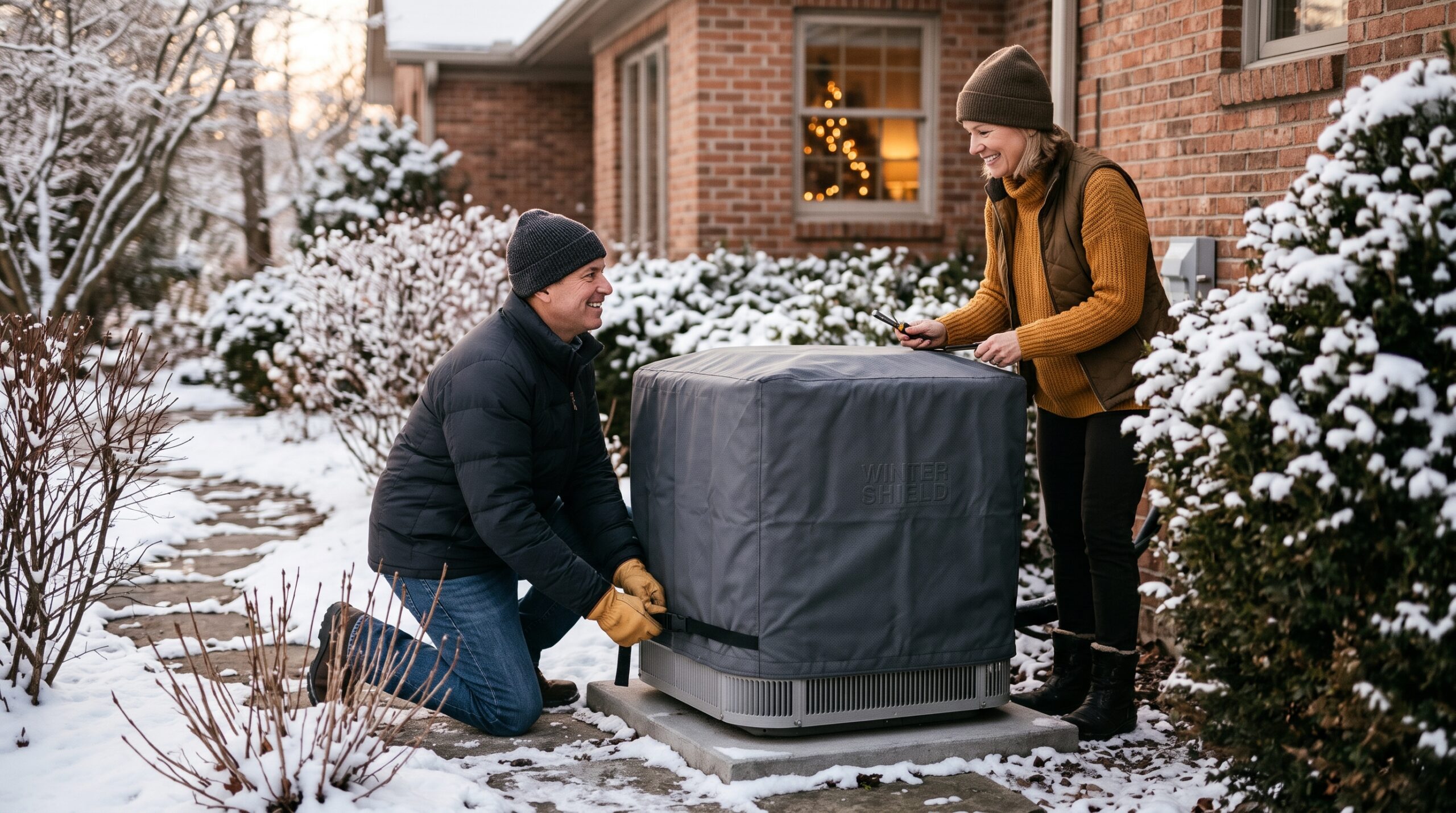
Protect outdoor AC unit is a crucial end-of-season task for homeowners across Roselle, IL as cooling demands end and severe winter weather approaches DuPage County. While residential central air conditioning condensers are engineered for outdoor weather exposure, heavy winter snowfall, falling icicles, blowing leaves, and freeze-thaw cycles can cause significant physical damage. Taking time to properly protect outdoor AC unit equipment in late autumn preserves delicate coil fins, prevents internal corrosion, and ensures your air conditioner starts smoothly next spring.
Homeowners throughout Roselle, Schaumburg, and Bloomingdale often wonder whether covering an air conditioning condenser is safe or necessary. Improper winterization can trap condensation and invite nesting rodents, while neglecting the unit leaves internal fan components vulnerable to heavy ice strikes. Following professional best practices gives your outdoor unit optimal protection without creating moisture problems.
Essential Actions to Protect Outdoor AC Unit Hardware
Taking practical winterization steps before the first heavy snowfall is the best way to protect outdoor AC unit equipment from physical and structural hazards. Focus on clearing debris and securing exterior components:
- Shut off the dedicated exterior electrical disconnect switch located on the wall beside your outdoor condenser to prevent accidental winter activation.
- Gently rinse away summer grass clippings, dirt, and tree pollen from exterior aluminum coil fins using a garden hose on low pressure.
- Clear away tall weeds, dead plants, and dry leaves within a two-foot perimeter around the condenser cabinet.
- Place a heavy piece of treated plywood across the top fan grille weighed down with a brick to deflect falling roof icicles.
Federal residential energy guidelines from USA.gov emphasize that seasonal equipment care protects residential investments and preserves long-term HVAC operating efficiency. Homeowners can also consult our helpful overview on furnace tune-up steps to ensure seamless transition into the primary winter heating season.
Never wrap an air conditioner entirely in plastic sheeting or heavy tarps from top to bottom. Completely sealed covers trap natural ground moisture inside the cabinet, creating condensation that accelerates rust on electrical contacts and metal compressor housings.
Winterization Best Practices for Air Conditioners
Proper seasonal protection balances protection against impact damage while allowing free air circulation through coil fins. Homeowners should observe these key guidelines to protect outdoor AC unit components throughout the freezing months:
- Use breathable, water-resistant top covers that shield only the top six to twelve inches of the cabinet while leaving side vents open.
- Inspect exterior copper suction line insulation foam and replace split or weathered sections with new UV-resistant pipe wrap.
- Ensure overhead gutters and roof valleys directly above the condenser are free of clogs to prevent icicles and water cascades.
- Inspect the concrete or composite equipment pad to confirm it remains level and has not settled or cracked from frost heaves.
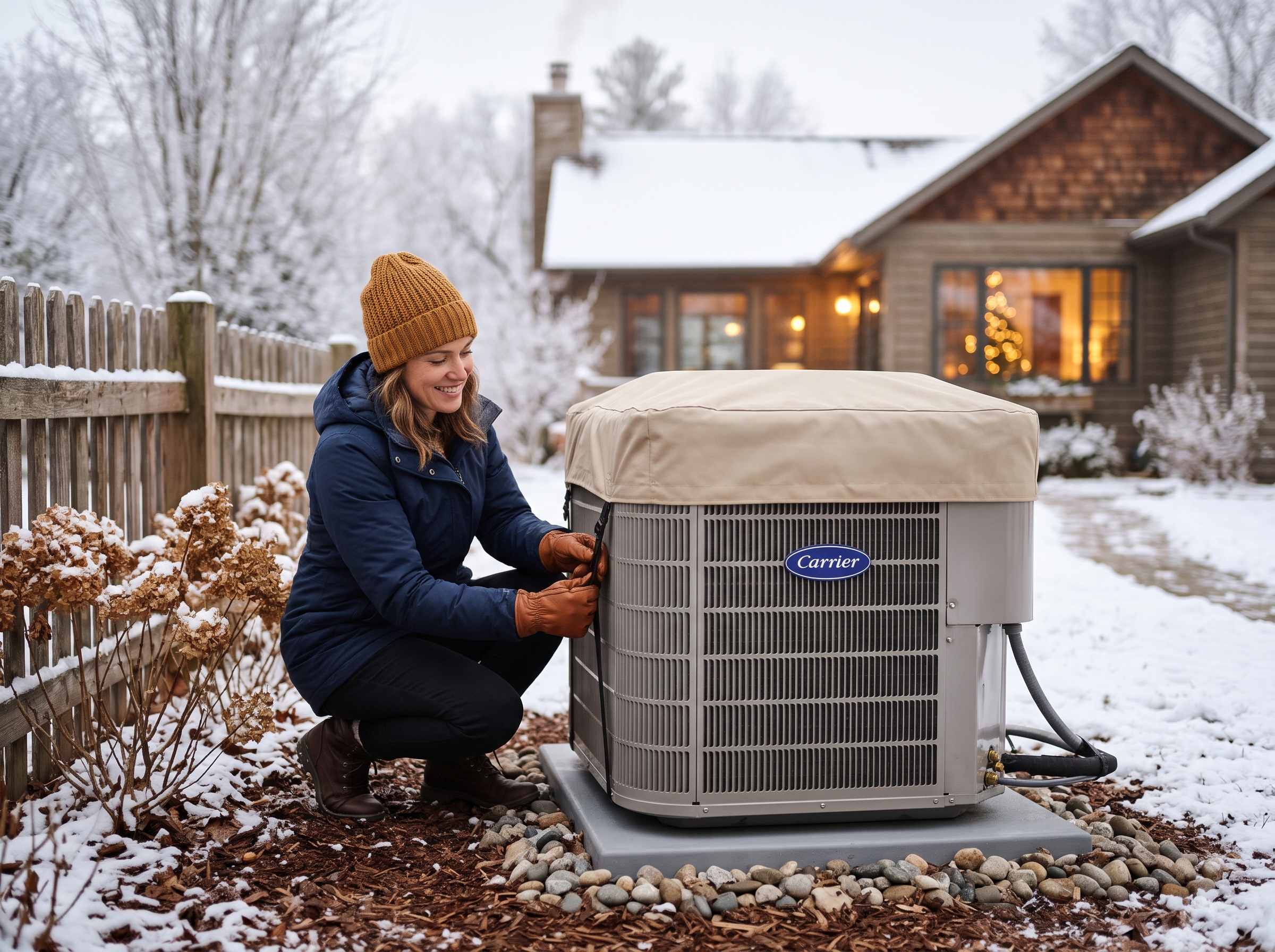
Public health guidelines from the CDC advise homeowners to maintain safe exterior home surroundings and secure outdoor electrical equipment before severe winter storms strike.
Rodents frequently seek shelter in warm, quiet outdoor enclosures during extreme cold. Keeping the bottom of the unit open and free of dry leaf piles prevents mice and squirrels from chewing through low-voltage control wiring during winter.
Professional End-of-Season HVAC Inspections
A licensed HVAC technician conducts a thorough multi-point checkup to verify that both cooling and heating equipment transition smoothly into the cold season. Technicians check electrical contactors, test capacitor health, and verify line set seals. Homeowners evaluating modern, high-efficiency options can review our guide on heating system upgrades to explore dual-fuel heat pumps and energy-saving systems.
Professional end-of-season service ensures that residual refrigerant oil settles properly and that no undetected electrical shorts develop over months of inactivity. When spring returns, your cooling system will be completely ready for peak-season operation.
Why Seasonal AC Care Matters in Roselle, IL
Roselle experiences heavy Midwestern snowfalls, freezing rain, and bitter polar vortex temperatures from late autumn through early spring. Massive roof icicles frequently drop from two-story eaves in neighborhoods near Medinah and Lake Street, creating severe impact risks for outdoor condensers below. When you protect outdoor AC unit equipment properly, you prevent expensive coil replacements, extend equipment lifespan, and guarantee dependable cooling when summer heat returns.
Northern Illinois winters are tough on outdoor mechanical equipment. Taking simple, proven steps to shield top fan assemblies while allowing airflow keeps internal mechanisms pristine. Proper seasonal care provides complete peace of mind through every blizzard and winter freeze.
Frequently Asked Questions
Should I completely wrap my outdoor air conditioner with a plastic tarp?
No, completely wrapping your unit traps condensation inside the cabinet, leading to rust, corrosion, and rodent infestation during winter.
Why should I turn off the outdoor AC electrical disconnect switch in winter?
Shutting off the disconnect switch prevents the air conditioner from accidentally starting on an unseasonably warm day, which can damage the compressor when refrigerant oil is cold.
What is the best way to shield my condenser from falling icicles?
Place a sturdy piece of plywood across the top grille of the unit and secure it with a brick or stone to absorb icicle impacts.
Do I need to protect an outdoor heat pump the same way as an air conditioner?
No, heat pumps operate throughout winter to provide home heat and must never be covered or restricted in any way.
How often should outdoor coil fins be cleared of autumn leaves?
Inspect the perimeter once in late autumn after all surrounding trees have dropped their leaves, removing debris from around and inside the cabinet.
Protect Your Roselle HVAC Investment Today
Ensure your home HVAC equipment stays in peak condition all year long. Comfort Pride Services offers expert end-of-season AC checkups, furnace maintenance, and winterization services across Roselle, IL and surrounding DuPage communities. Contact our licensed team today to protect your cooling and heating systems through every season.