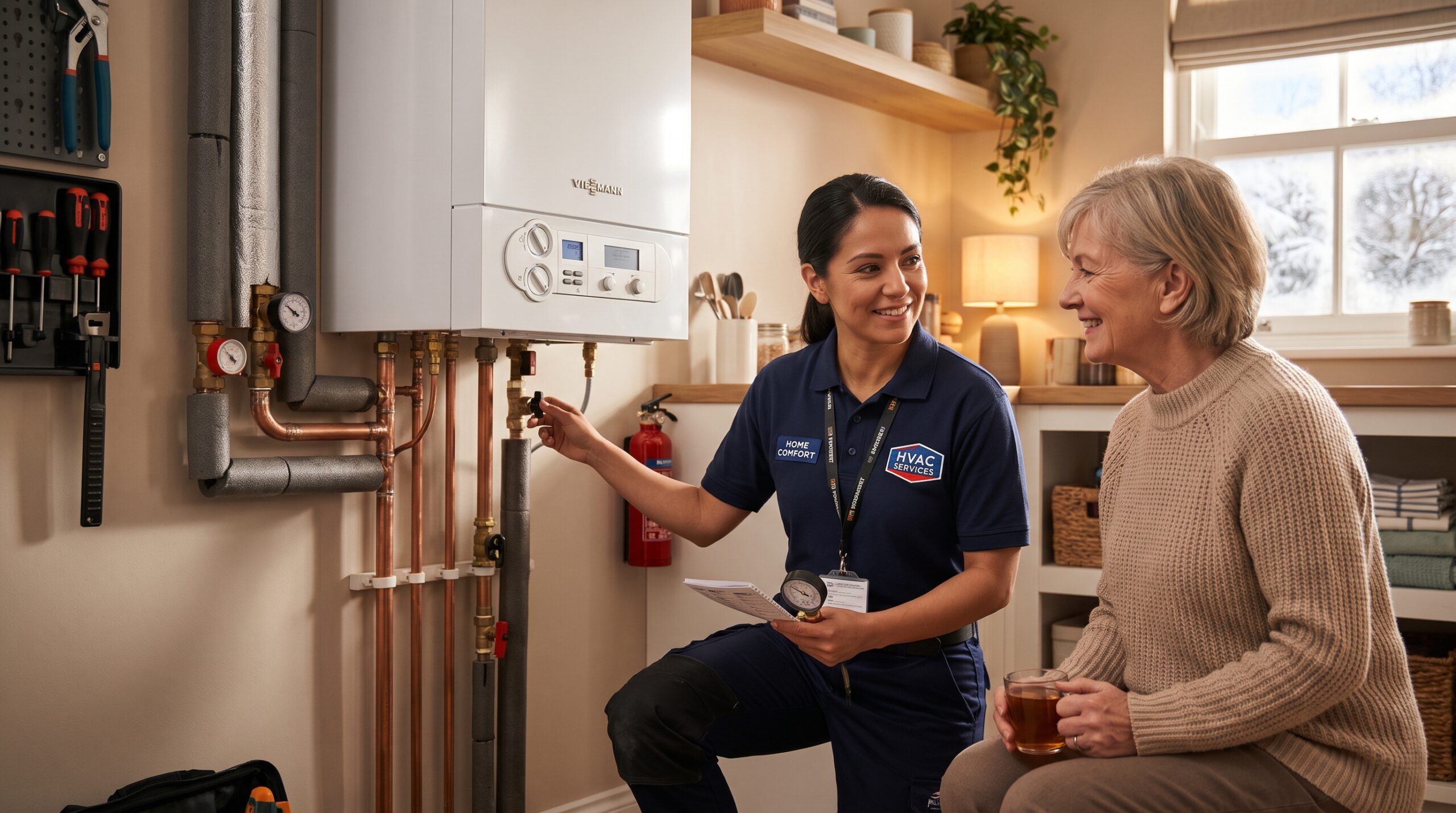
Boiler maintenance is an essential seasonal heating service for homeowners across Roselle, IL who depend on hydronic heating to stay warm through bitter winter freezes. A well-serviced boiler circulates hot water or steam evenly to baseboards and radiators without wasting valuable natural gas. Investing in annual boiler maintenance prevents sudden heating breakdowns, extends heating system longevity, and keeps heating bills manageable throughout the cold season across DuPage County.
Properties in Roselle, Schaumburg, and Bloomingdale often feature radiant boiler heating because it provides consistent, radiant warmth without blowing dust through air ducts. However, mineral deposits, aging relief valves, and trapped air pockets in piping can slowly degrade heating performance over time. Scheduled upkeep ensures your system operates at peak safety and peak efficiency.
Key Safety Steps Included in Boiler Maintenance
Professional heating technicians follow a meticulous checklist during routine boiler maintenance to ensure your home heating equipment operates without risks. Hydronic heating systems rely on precise water pressure, clean fuel combustion, and reliable safety relief valves. A complete service appointment covers these vital components:
- Testing water pressure gauges and calibrating expansion tanks to maintain twelve to fifteen PSI.
- Inspecting pressure relief valves to verify that excess pressure vents safely without leakage.
- Cleaning combustion chambers and burner orifices to ensure clean fuel ignition and high fuel efficiency.
- Evaluating electronic aquastat controls and safety high-limit shutoff switches.
Federal residential energy guidance from USA.gov highlights that regular heating system maintenance preserves mechanical efficiency and reduces monthly energy costs. Homeowners can also review our tips on furnace tune-up steps to learn how proactive seasonal service keeps homes warm all winter long.
Checking combustion safety is essential for household safety. Technicians inspect flue pipes, chimney draft, and heat exchangers for signs of corrosion or blockages that could cause combustion gases to enter living spaces.
Homeowner Checklist to Support Boiler Maintenance
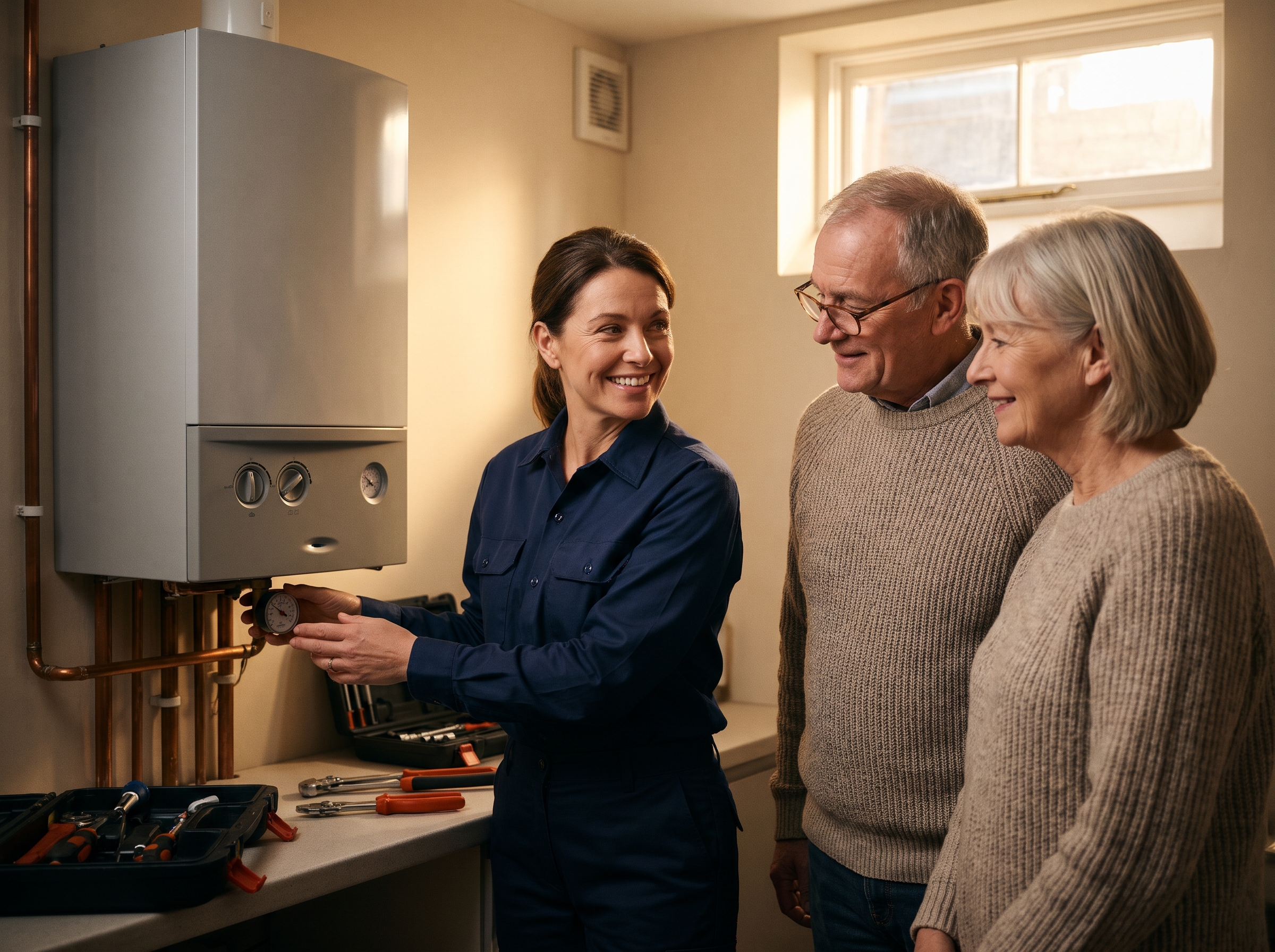
While licensed HVAC technicians should handle internal electrical and combustion components, homeowners can perform basic checks to support regular boiler maintenance. Routine visual checks between service calls help spot small issues before they escalate:
- Check the boiler room floor weekly for signs of water drips around pipe joints, circulator pumps, and shutoff valves.
- Look at the system temperature and pressure gauge to confirm normal operational readings.
- Bleed cold radiators throughout your home using a radiator key to release trapped air bubbles.
- Ensure the mechanical room stays clean, uncluttered, and free of combustible materials or cleaning solvents.
Public safety recommendations from the CDC advise families to inspect heating ventilation systems every fall to guard against hazardous carbon monoxide leaks during winter cold spells.
When radiators feel warm on the bottom but cold at the top, air pockets are preventing hot water circulation. Releasing trapped air restores balanced warmth to every room while easing workload on your circulating pump.
Professional Hydronic Diagnostics and Upgrades
During comprehensive boiler maintenance, licensed specialists test electrical relays, lubricate pump bearings, and flush sediment from low-water cutoff valves. If your current hydronic unit is over fifteen years old, reviewing our guide on heating system upgrades can help you evaluate modern high-efficiency condensing boilers.
Condensing boilers achieve efficiency ratings above ninety percent by extracting latent heat from exhaust flue gases. Upgrading older cast-iron equipment delivers significant long-term energy savings while reducing home carbon emissions.
Why Seasonal Heating Care Matters in Roselle, IL
Roselle experiences prolonged subzero weather from late autumn through early spring, demanding continuous output from residential heating boilers. Cold weather chills basements and strains circulator pumps in neighborhoods near Medinah and Lake Street. Prioritizing boiler maintenance protects your home against sudden mid-winter failures, prevents frozen radiator pipes, and provides quiet, reliable comfort throughout the coldest winter storms.
Winter in northern Illinois brings heavy snowfalls and fierce wind chills that test heating systems to their limits. A properly maintained hydronic system delivers steady, soothing warmth without dry drafts. Scheduling your annual maintenance before the first deep freeze ensures reliable comfort all winter.
Frequently Asked Questions
How often should residential boiler maintenance be scheduled?
Residential boilers should receive professional maintenance once a year, preferably in early autumn before winter heating begins.
What does kettling noise in a heating boiler mean?
Kettling sounds indicate limescale and mineral deposits coating the heat exchanger, which traps boiling water and creates rumbling noises.
Why do my radiators need bleeding during winter?
Air bubbles collect at high points in radiator piping, blocking hot water flow and leaving the upper radiator sections completely cold.
What is normal water pressure for a home hydronic boiler?
Most residential hydronic heating systems operate safely between twelve and fifteen pounds per square inch when cold.
How long do residential cast-iron heating boilers typically last?
With consistent professional care, quality cast-iron boilers routinely provide reliable home heating for twenty to thirty years.
Schedule Expert Heating Service in Roselle Today
Keep your heating system running efficiently and safely all winter long. Comfort Pride Services delivers dependable boiler maintenance, heating tune-ups, and hydronic heating repairs across Roselle, IL and surrounding DuPage communities. Contact our certified HVAC team today to book your visit and protect your winter comfort.